logo
Good price  online

products details

Created with Pixso. Home Created with Pixso. Products Created with Pixso.
Inclined Conveyor Belt
Created with Pixso. EP100 EP150 EP200 Skirt Conveyor Belt Lightweight Multi Functional for 0-90 Degrees Inclination

EP100 EP150 EP200 Skirt Conveyor Belt Lightweight Multi Functional for 0-90 Degrees Inclination

Brand Name: UCER
Model Number: EP100/EP150/EP200
MOQ: 100 meters
Price: Negotiable
Delivery Time: 10-30 days
Payment Terms: L/C,D/P,T/T
Detail Information
Place of Origin:
China
Certification:
Enterprise credit rating AAA
Color:
Black
Storage Temperature:
-18℃-40℃
Core Material:
EP1200
Inclination Angle:
0-90 Degrees
Model:
ST630/ST800
Standard:
GB/T7984-2001
The Thickness Of The Upper Cover:
3-6mm
The Thickness Of The Lower Cover Rubber:
1.5-4.5mm
Packaging Details:
Iron packing, iron frame or other
Supply Ability:
10000 per month
Product Description
EP100 EP150 EP200 Skirt Conveyor Belt Lightweight Multi Functional
EP100 EP150 EP200 Skirt Conveyor Belt

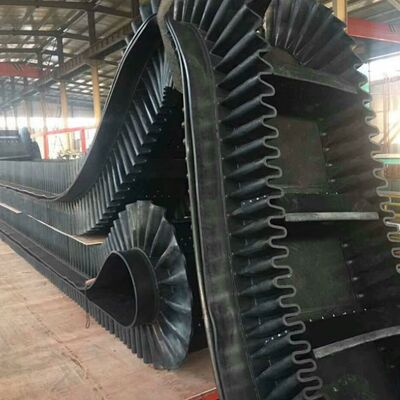
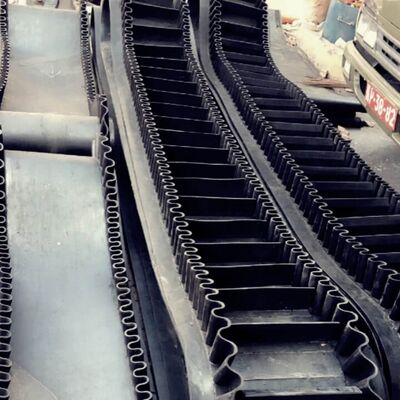
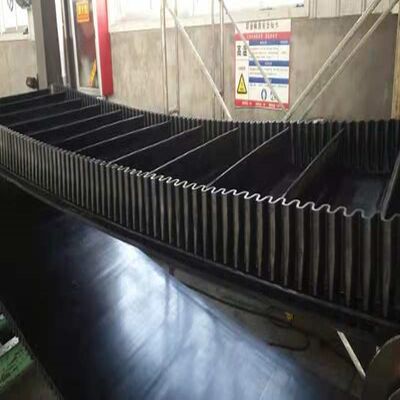
Skirt conveyor belts are available in two configurations: conveyor belts with skirts only, and conveyor belts with skirts and clapboards. These belts can continuously convey various bulk materials at inclination angles ranging from 0-90 degrees, offering exceptional versatility with large conveying angles, wide application range, and compact footprint requirements.

Key advantages include no transfer points, reduced civil construction investment, low maintenance costs, and high conveying capacity. This design solves conveying challenges that cannot be achieved by ordinary conveyor belts or patterned conveyor belts. The corrugated sidewall conveyor belt can be engineered as a complete conveyor system according to specific requirements, eliminating the need for intermittent conveying and complex lifting systems.

Maintenance and Instructions
  • During transportation and storage, conveyor belts should be kept clean and protected from direct sunlight, rain, or snow. Avoid contact with acids, alkalis, oils, organic solvents, and maintain a minimum distance of one meter from heating devices.
  • Storage temperature should be maintained between -18℃ to 40℃ with relative humidity between 50-80% RH.
  • During storage, products must be kept in roll form and never folded. Quarterly rotation is recommended during extended storage periods.
  • Conveyor belts of different types and specifications should not be connected together. Glued joints are preferred for optimal performance.
  • Selection of conveyor belt type, structure, specification, and number of layers should be based on specific usage conditions and requirements.
  • Operating speed should generally not exceed 2.5 m/s. For materials with large lump sizes and high abrasion characteristics, or when using fixed plow-type unloading devices, lower speeds are recommended.
  • Proper selection of transmission roller diameter, conveyor belt cloth layer compatibility, drive and reversing roller matching, and roller groove angle requirements should follow design specifications.
Features and Operational Guidelines

As conveyor belts become increasingly prevalent in industrial production, manufacturers focus on multiple varieties, high performance, light weight, multi-functionality, and extended service life. Proper conveyor belt usage is critical for optimal performance:

  • Prevent rollers from being covered by materials, which can cause rotation failure. Avoid material leakage becoming trapped between rollers and the belt. Ensure proper lubrication of movable components, but keep the conveyor belt itself free from oil contamination.
  • Avoid starting the conveyor belt under load conditions.
  • Monitor for belt deviation and implement corrective measures promptly when detected.
  • When localized damage is identified, perform immediate artificial cotton repairs to prevent expansion of the damaged area.
  • Prevent the conveyor belt from contacting frames, pillars, or blocked materials to avoid breakage and tearing.
Product Images
EP100 EP150 EP200 Skirt Conveyor Belt Lightweight Multi Functional for 0-90 Degrees Inclination 0 EP100 EP150 EP200 Skirt Conveyor Belt Lightweight Multi Functional for 0-90 Degrees Inclination 1 EP100 EP150 EP200 Skirt Conveyor Belt Lightweight Multi Functional for 0-90 Degrees Inclination 2
Good price  online

Products Details

Created with Pixso. Home Created with Pixso. Products Created with Pixso.
Inclined Conveyor Belt
Created with Pixso. EP100 EP150 EP200 Skirt Conveyor Belt Lightweight Multi Functional for 0-90 Degrees Inclination

EP100 EP150 EP200 Skirt Conveyor Belt Lightweight Multi Functional for 0-90 Degrees Inclination

Brand Name: UCER
Model Number: EP100/EP150/EP200
MOQ: 100 meters
Price: Negotiable
Packaging Details: Iron packing, iron frame or other
Payment Terms: L/C,D/P,T/T
Detail Information
Place of Origin:
China
Brand Name:
UCER
Certification:
Enterprise credit rating AAA
Model Number:
EP100/EP150/EP200
Color:
Black
Storage Temperature:
-18℃-40℃
Core Material:
EP1200
Inclination Angle:
0-90 Degrees
Model:
ST630/ST800
Standard:
GB/T7984-2001
The Thickness Of The Upper Cover:
3-6mm
The Thickness Of The Lower Cover Rubber:
1.5-4.5mm
Minimum Order Quantity:
100 meters
Price:
Negotiable
Packaging Details:
Iron packing, iron frame or other
Delivery Time:
10-30 days
Payment Terms:
L/C,D/P,T/T
Supply Ability:
10000 per month
Product Description
EP100 EP150 EP200 Skirt Conveyor Belt Lightweight Multi Functional
EP100 EP150 EP200 Skirt Conveyor Belt

Skirt conveyor belts are available in two configurations: conveyor belts with skirts only, and conveyor belts with skirts and clapboards. These belts can continuously convey various bulk materials at inclination angles ranging from 0-90 degrees, offering exceptional versatility with large conveying angles, wide application range, and compact footprint requirements.

Key advantages include no transfer points, reduced civil construction investment, low maintenance costs, and high conveying capacity. This design solves conveying challenges that cannot be achieved by ordinary conveyor belts or patterned conveyor belts. The corrugated sidewall conveyor belt can be engineered as a complete conveyor system according to specific requirements, eliminating the need for intermittent conveying and complex lifting systems.

Maintenance and Instructions
  • During transportation and storage, conveyor belts should be kept clean and protected from direct sunlight, rain, or snow. Avoid contact with acids, alkalis, oils, organic solvents, and maintain a minimum distance of one meter from heating devices.
  • Storage temperature should be maintained between -18℃ to 40℃ with relative humidity between 50-80% RH.
  • During storage, products must be kept in roll form and never folded. Quarterly rotation is recommended during extended storage periods.
  • Conveyor belts of different types and specifications should not be connected together. Glued joints are preferred for optimal performance.
  • Selection of conveyor belt type, structure, specification, and number of layers should be based on specific usage conditions and requirements.
  • Operating speed should generally not exceed 2.5 m/s. For materials with large lump sizes and high abrasion characteristics, or when using fixed plow-type unloading devices, lower speeds are recommended.
  • Proper selection of transmission roller diameter, conveyor belt cloth layer compatibility, drive and reversing roller matching, and roller groove angle requirements should follow design specifications.
Features and Operational Guidelines

As conveyor belts become increasingly prevalent in industrial production, manufacturers focus on multiple varieties, high performance, light weight, multi-functionality, and extended service life. Proper conveyor belt usage is critical for optimal performance:

  • Prevent rollers from being covered by materials, which can cause rotation failure. Avoid material leakage becoming trapped between rollers and the belt. Ensure proper lubrication of movable components, but keep the conveyor belt itself free from oil contamination.
  • Avoid starting the conveyor belt under load conditions.
  • Monitor for belt deviation and implement corrective measures promptly when detected.
  • When localized damage is identified, perform immediate artificial cotton repairs to prevent expansion of the damaged area.
  • Prevent the conveyor belt from contacting frames, pillars, or blocked materials to avoid breakage and tearing.
Product Images
EP100 EP150 EP200 Skirt Conveyor Belt Lightweight Multi Functional for 0-90 Degrees Inclination 0 EP100 EP150 EP200 Skirt Conveyor Belt Lightweight Multi Functional for 0-90 Degrees Inclination 1 EP100 EP150 EP200 Skirt Conveyor Belt Lightweight Multi Functional for 0-90 Degrees Inclination 2